
ॐ
Pushkar Mandir · Rishikesh, Uttarakhand
The Ashram
आश्रम
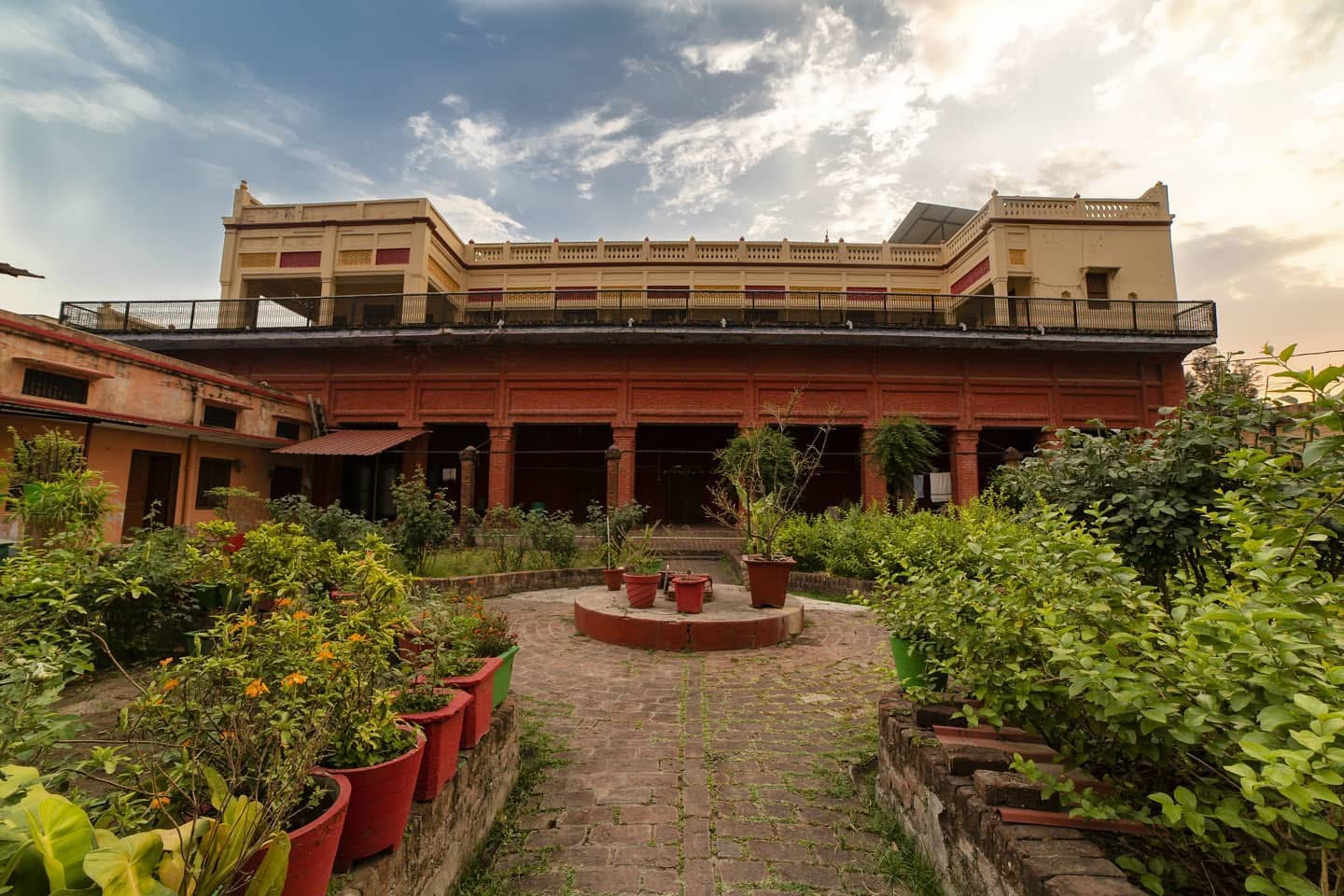
A working ashram, not a resort. Practice halls and gardens gathered around an old temple, a kitchen that cooks three times a day, and a rhythm that has not changed much in a very long time.
“Simple outside, so that something can happen inside.”
The Setting
Twelve acres where the mountains meet the plain
Rishikesh has been a place of practice for as long as anyone has written things down. The Ganga arrives here still cold from the mountains, and the town has grown up around the people who came to sit beside it.
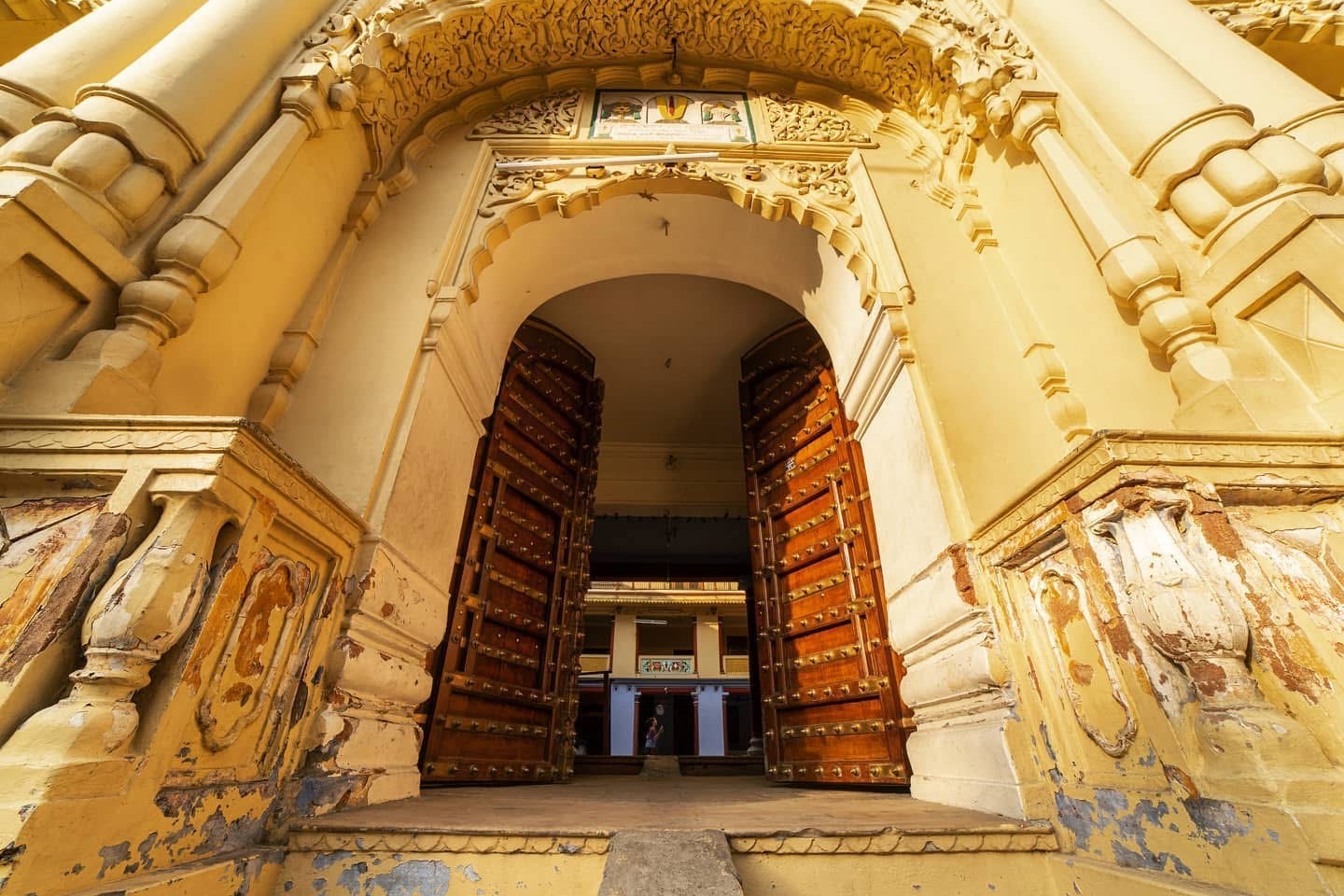
Our campus is a working ashram on twelve acres at Pushkar Mandir — halls, gardens, kitchen and guest rooms gathered around the temple. It is deliberately plain. Everything here exists to make practice easy and distraction difficult.
The temple was established in 1937 by Swami Veer Raghavacharya Ji, and the practice here has continued without a break since — carried down inside one family, and now opened to seekers from everywhere by his grandson, Parasha Ji.
The Spaces
What you will find on the campus
शाला
The Practice Halls
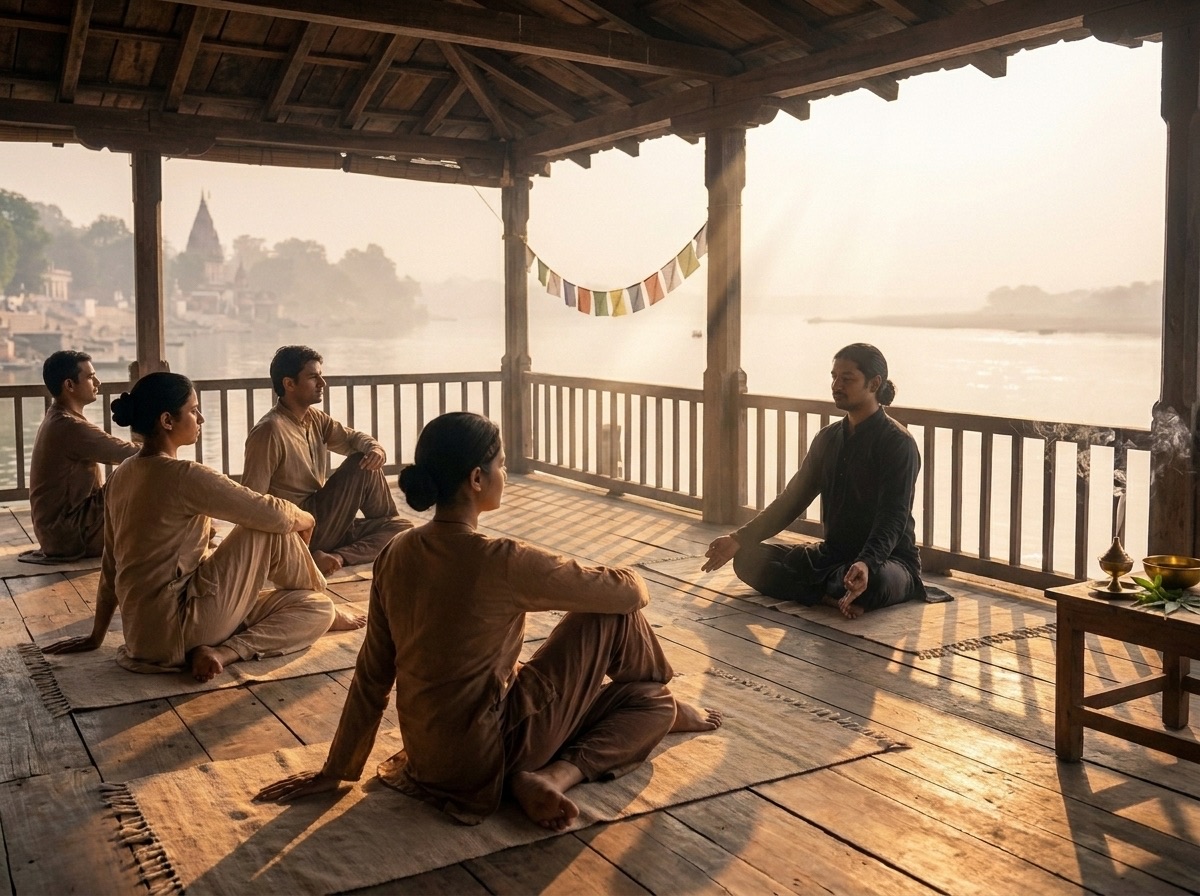
Open halls with room to move and shutters that fold back to the garden. Mats, bolsters and props are provided; classes stay small enough that a teacher can reach everyone.
मन्दिर
The Temple
Pushkar Mandir, established in 1937, sits at the heart of the campus. Morning and evening ārti are open to everyone staying with us, and to visitors who would like to sit quietly at the back.
रसोई
The Kitchen
A sattvic kitchen cooking three fresh vegetarian meals a day — no onion, no garlic, nothing from a packet. Guests eat together on the floor of the dining hall.
निवास
Guest Rooms
Simple, clean twin and single rooms with hot water and cotton bedding. Nothing lavish and nothing lacking — rooms are for sleeping and study, life happens in the shared spaces.
उद्यान
The Gardens
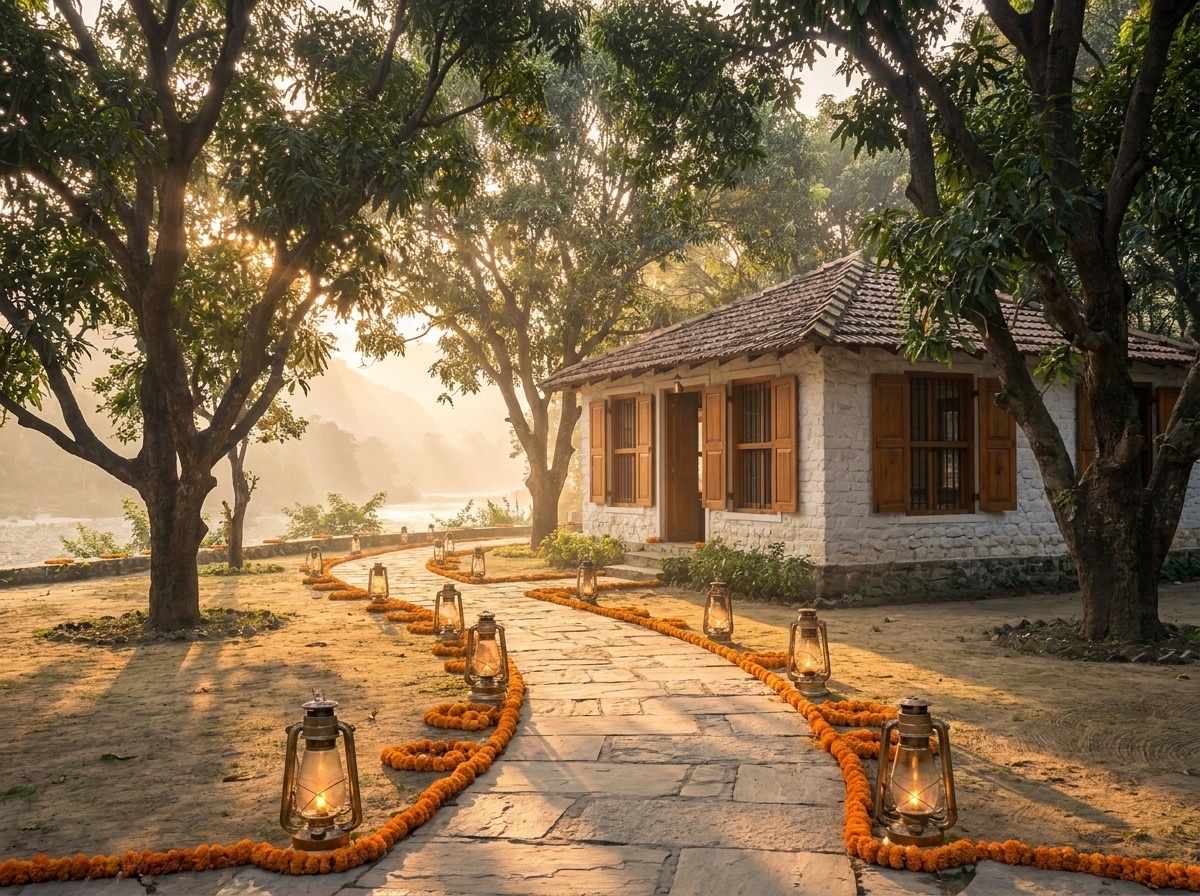
Mango and neem trees, a marigold-lined path, tulsi in clay pots, and benches placed where the light falls in the late afternoon. Much of the produce comes from the kitchen garden.
गङ्गा
The River
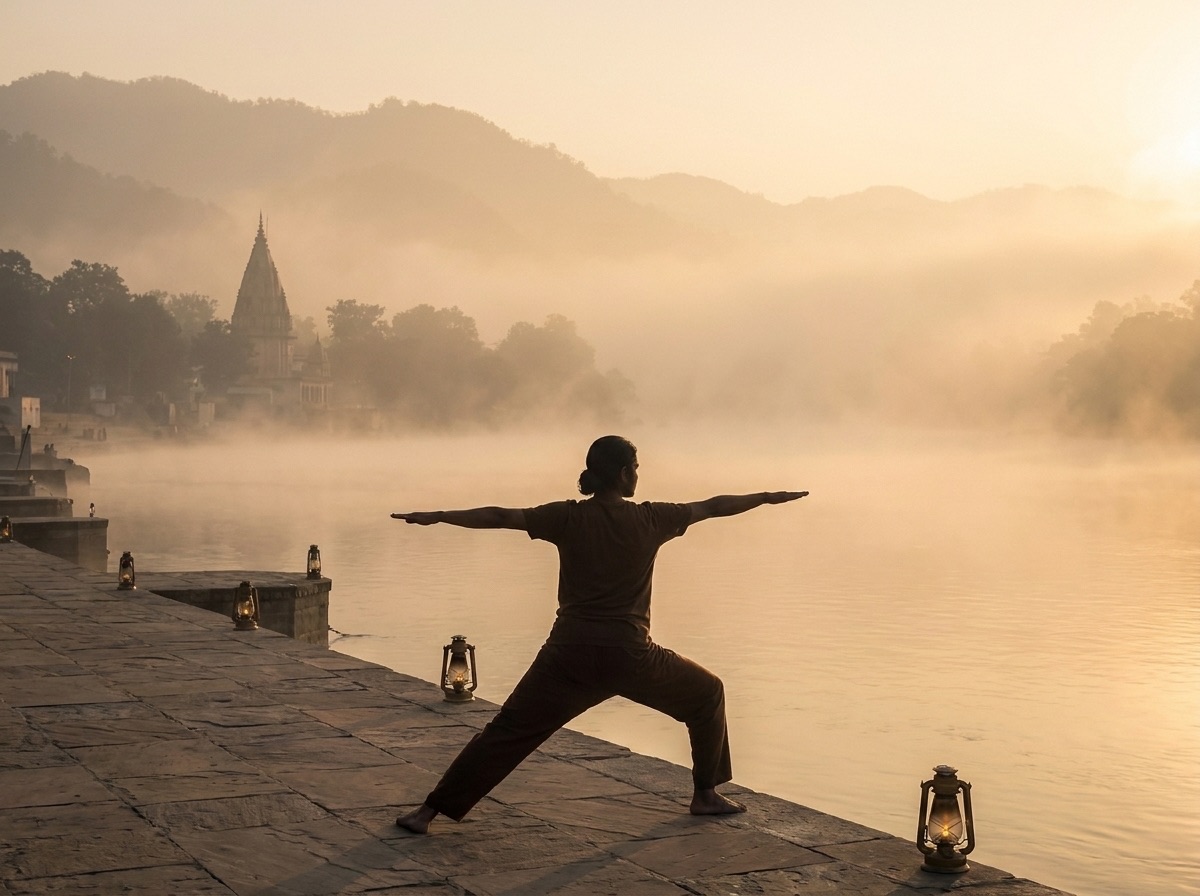
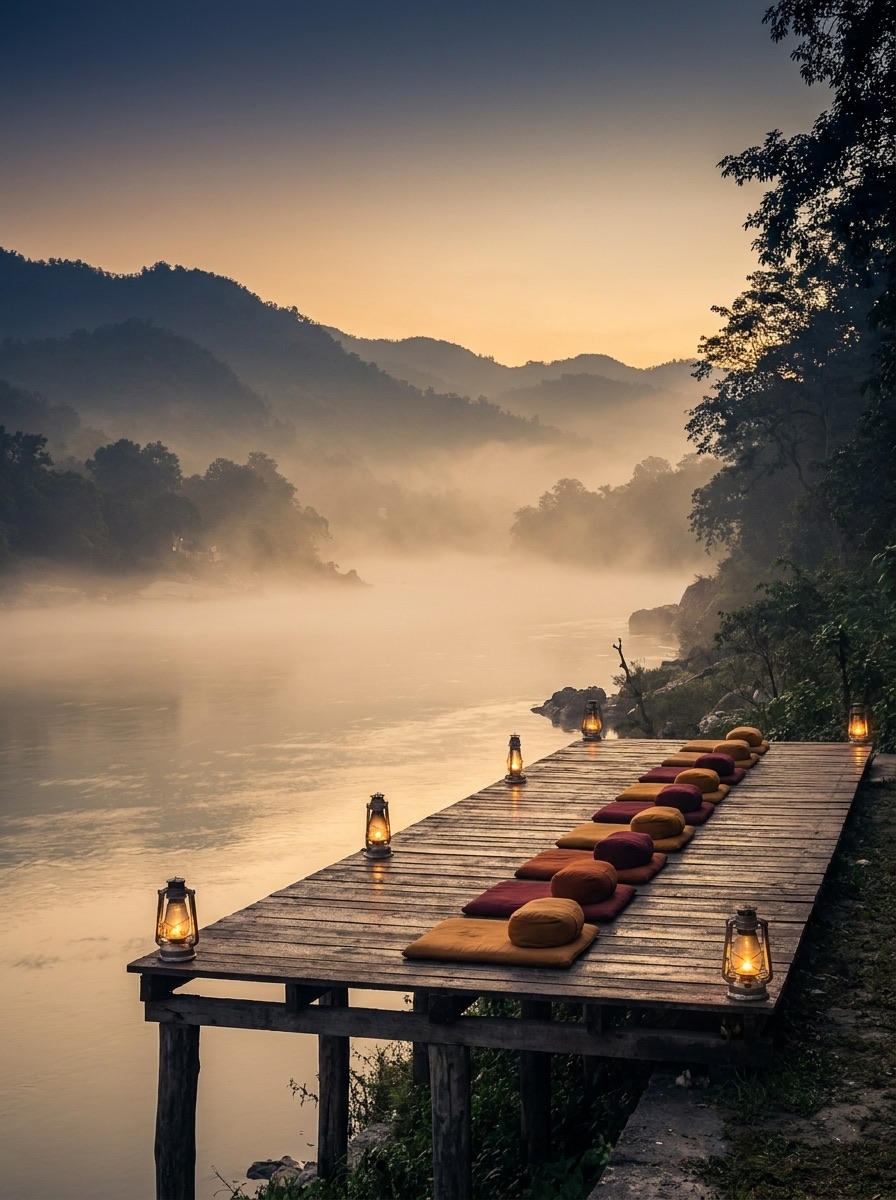
The Ganga is a short walk downhill. Many guests begin the day there before practice, and end it watching the evening lamps float down from the ghats.
The Grounds
A look around

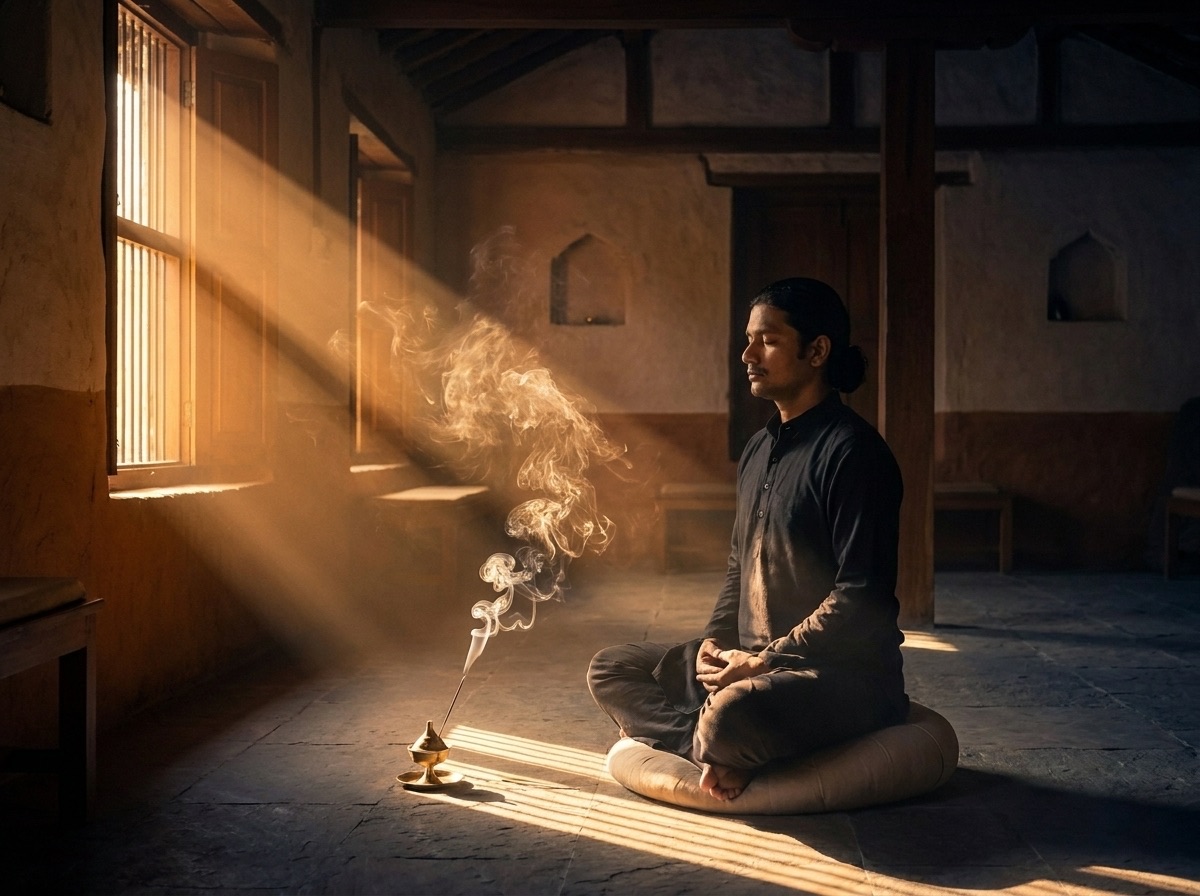

A Day Here
The day has a shape, and the shape does the work
Nobody has to decide anything. The bell rings, and the day carries you — practice, food, work, study, rest, in the same order every day. Most guests find the structure is the most restful part.
05:00
Waking bell
A single bell, then quiet. Hot water is available in the courtyard.
05:30
Kriyā & prāṇāyāma
Cleansing practices and breathwork while it is still dark.
06:30
Hatha āsana
The long morning practice, ending as the sun clears the ridge.
08:30
Breakfast
Taken together, in silence.
10:00
Sevā
An hour of shared work — the garden, the kitchen, the halls.
11:30
Philosophy
Study and discussion in the shade of the mango trees.
13:00
Lunch & rest
The main meal of the day, then the quietest hours.
16:30
Afternoon practice
Gentler āsana, meditation, or personal study.
18:30
Ārti & satsang
Lamps at the temple, chanting, and sitting together.
20:00
Dinner
Light and early.
21:30
Lights out
The campus is dark and silent by half past nine.
How We Live
The house rules, such as they are
None of this is imposed to be difficult. Each one removes something that gets in the way.
- Practice comes before everything else in the day
- Meals are vegetarian, sattvic and eaten together
- Mornings are held in silence until after breakfast
- Sevā — shared work — is part of every day, for everyone
- No alcohol, smoking or meat on the campus
- Phones and cameras stay out of the practice halls
- Simple, modest clothing that covers shoulders and knees
- Doors close at ten; the day starts before five
Born
Rural Rajasthan, late nineteenth century
Known as
Bade Maharaj
Founded
Veer Raghav Bhagwan, 1937 — the temple now called Pushkar Mandir
Carried forward by
His grandson, Parasha Ji, through Parasha Foundation
Our Founder
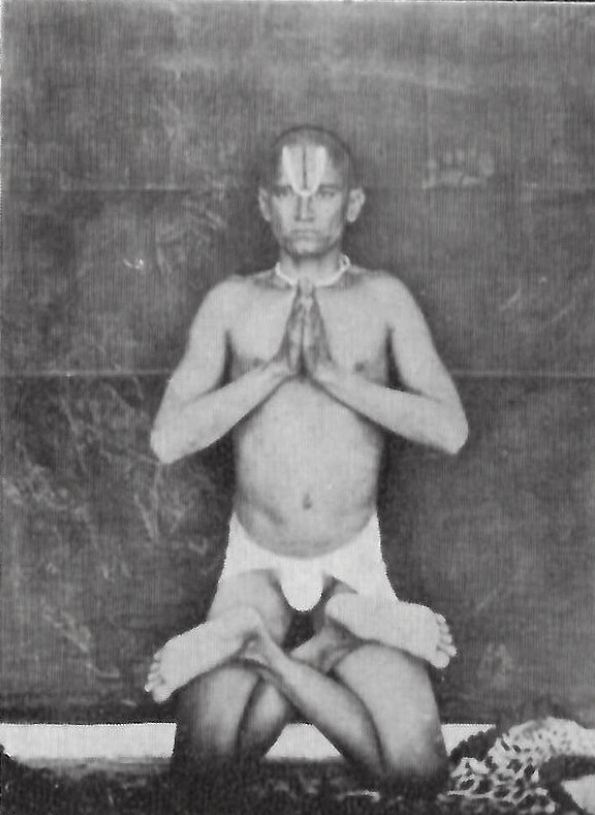
Shri Veer Raghavacharya Ji
श्री वीर राघवाचार्य जी
A revolutionary, whose gong was eventually heard by the whole world. One of the pioneers of the “Rishikesh way” of life that carried Vedantic philosophy out of these hills — and a man who lived exactly as he preached.
Born in rural Rajasthan in the late nineteenth century, Bade Maharaj — as he was affectionately known — took the plunge into Vedic scholarship early in life. When those studies were done he set out on the Char Dham yatra, which in the early twentieth century was understood, quite literally, as the final journey of a life: people undertook the arduous task at the end of their years, did not expect to return from the mountains, and thought of it as becoming one with God.
He made the journey young. Coming back, he saw that Rishikesh was the last resort for everyone setting out on that final lap, and he wanted to establish a phrontistery that served both purposes at once — a school of practice, and a last place to rest before the yatra. In 1937 he established Veer Raghav Bhagwan, the temple now known as Pushkar Mandir.
Rishikesh holds a particular place in both Hindu mythology and Himalayan geography. Right at the confluence where the Ganga steps into the plains, ringed by the steeply rising higher Himalayas, it carries the calming influence of the river and the intimidating presence of the mountains at once — a place both exciting and relaxing, and the perfect one for a yogic endeavour. The Himalayas are known as ego breakers for the effect they have on a person: they make you realise how small we really are in front of nature.
It was here that he brought to life his wisdom and his ambition for the yogic tradition — which, as a radical of his time, he held to be all-inclusive and non-discriminatory by virtue of being a human dharohar, an inheritance of humankind.
This vision is what I believe in — not because it came from my family, but because my family came from it. It is both a privilege and a duty to spread this message.
Parasha Ji, his grandson
Parasha Foundation builds on that vision, and works toward what he hoped for: that the world might come together as a family, in a happy, healthy and wise relationship — with one another, and with the universe.
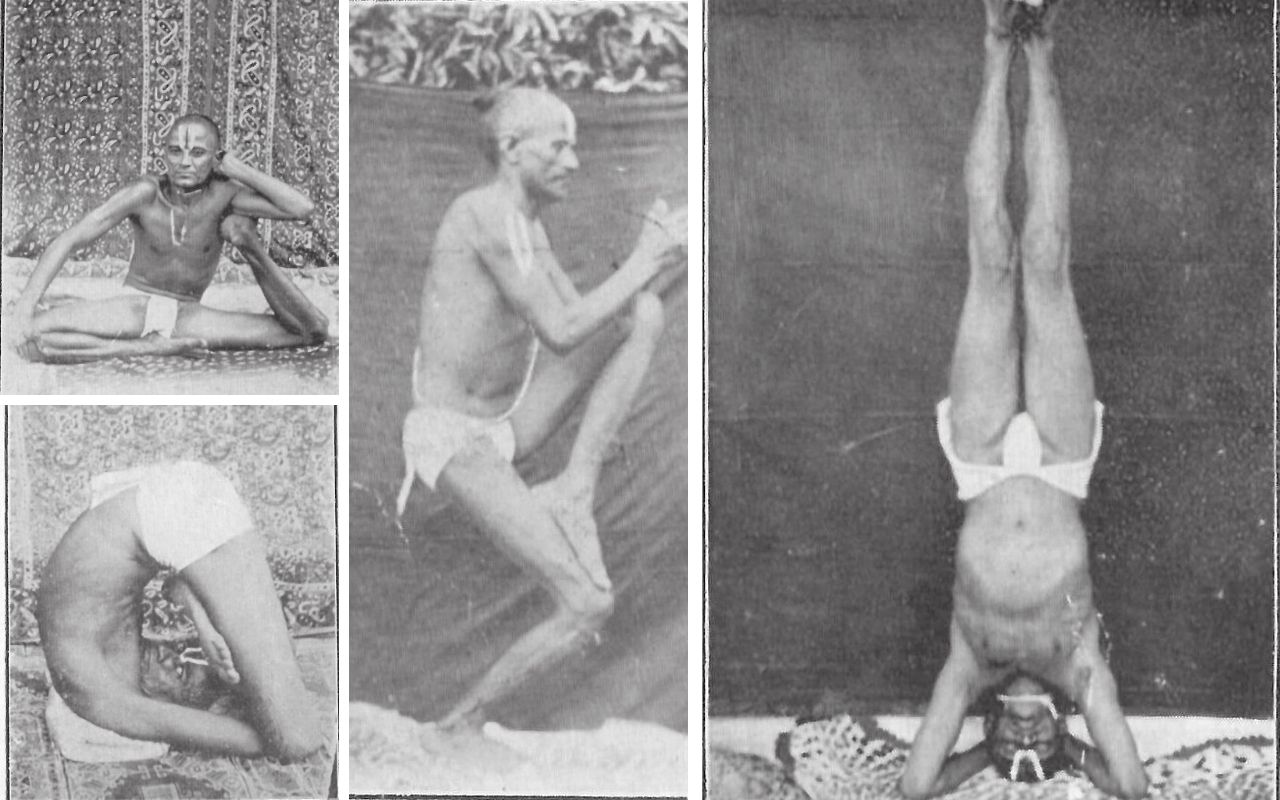
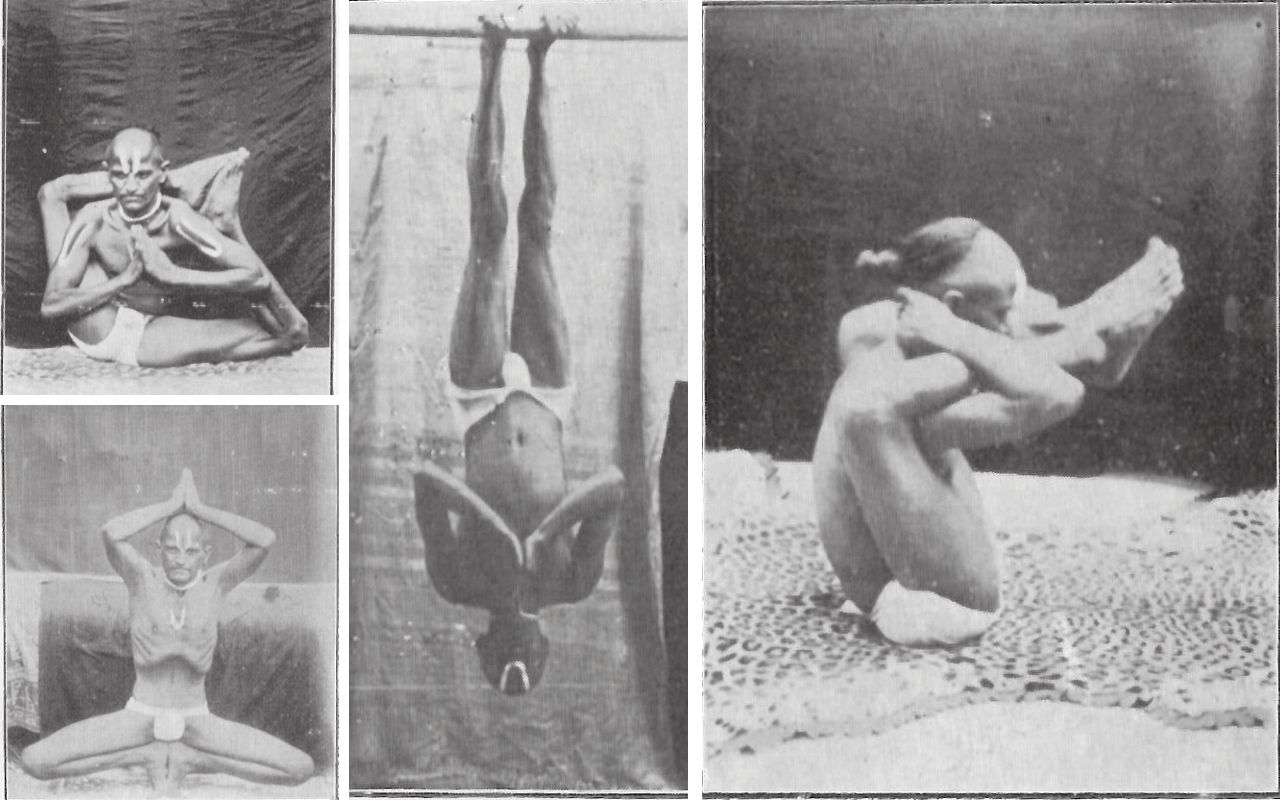
From the Ashram Archive
Come and Stay
Reading about an ashram is not the same as waking up in one
Guest rooms are held for those joining an immersion, a training or a retreat. Antarbodh, our seven-day residential week, is the gentlest way in.